Sunday, June 9, 2013

Pagan Humanism: A Tradition of Rational Religion


Humanism is the concept that human reason, need, perception, ethics, and experience are the primary drivers of a satisfactory ordering of inner life, and of interactions with others and the world. Though humanists themselves disagree on many points, and the principles themselves are always being honed, the Canadian Humanists say "Humanists are guided by reason and scientific inquiry, inspired by music and art, and motivated by ethics, compassion and fairness." Currently more associated with secularism, Humanism was originally conceived as a revival of the classical Naturalism, with sacredness of the human condition and the true nature of reality at its core.


Happy Human logo of Humanism

History of Humanism


Humanism sprung out of the 19th century "ism"s of philosophical thought; when scholars were doing some serious rethinking in the Western world about how science, culture, economics, art, and individuals interact. Hot on the heels of the American and French revolutions, philosophers were forced to consider that top down authority of the Church and the State might not be the only way, or even the "natural" or "ordained" way of organizing society or human thought. Dogma and faith were no longer a good enough justification for any practice or organization. Reason, scientific inquiry and Nature had again become hugely popular and esteemed by all classes of humanity, no longer a mere hobby and curiosity for rich amateur eccentrics. The concepts were even occasionally worshipped as an Ideal in Western Europe as the Cult of Reason, especially during the last days of the French Revolution.

It was their own fault, really. Religious authority in Europe for the past 1500 years had derived from the top-down, fundamentalist, radical, and dogmatic type of Christianity, which had set itself in direct opposition to science, highly unusual in religious traditions. State authority, including economic and societal systems, had piggybacked on that authority for nearly as long, making opposition to either an offence against God. Now the peasants were not only revolting, but ruling. Everything that the Church and State had taught about class, natural roles, authority and how the world worked was demonstrably wrong. So paradigms more in keeping with what could actually be seen and proved were needed. Into this came the renewed regard for Science, Naturalism, and the need to find out how the Universe functioned, and how humans fit into it properly. Personal experience and provable measurements, not outside authoritative dogma, were once again the preferred meaningful interaction with Reality and Deity.


Philosophy of Humanism


From Wikipedia: "In modern times, many humanist movements have become strongly aligned with secularism, with the term Humanism often used as a byword for non-theistic beliefs about ideas such as meaning and purpose", largely due to the American school of Humanists who created the Humanist Manifesto in 1933. This has never precluded the original and continuing use of the term in other philosophies, only occluded it. More of a co-opting, really...

Religious Humanism is the philosophy of Humanism with a religious world view and symbology, including revealed religions. From What is Religious Humanism? Humanist Philosophy as a Religious Position by Austin Cline, 

"The functions of religion often cited by religious humanists include things like fulfilling the social needs of a group of people (such as moral education, shared holiday and commemorative celebrations, and the creation of a community) and satisfying the personal needs of individuals (such as the quest to discover meaning and purpose in life, means for dealing with tragedy and loss, and ideals to sustain us). For religious humanists, meeting these needs is what religion is all about; when doctrine interferes with meeting those needs, then religion fails." 
Many religious traditions, it has been argued, were already humanist in philosophy and rational in practice. "Science" is an agreed upon method of quantifiably describing reality. The only other methods we can use are religious or philosophical, and most traditions gave them varying weights as Truth. The "middle east' preserved scientific knowledge as a bastion of the Islamic faith for centuries into the Xian control-and-destroy Dark Ages. Buddhism insists on inner truth reconciling with outer experience, even though technically all around is illusion. Traditional aboriginal systems require accurate knowledge of biosystems and tech, or crops fail, animals die and humans starve. Taoism, kung fu, yoga and other forms of religion and spirituality are human centered in they defy the conventions they live under and provide a route for those who do not wish to integrate into surrounding systems of control.

Nearly all aboriginal worldviews, including European, were usually more egalitarian, democratic, pragmatic and scientific, with less blind devotion to dogma than the later Christian fundie conquerors - one of the reasons those usurpers put themselves in such opposition to those ideas. The pagans deal with the reality of the world: the crops, the animals, health and well-being... Human integration and sustainability with the environment, as its caretakers and partners, is a constant theme, with knowledge sought for, and altered as discovered, as natural and desirable to those goals. Though many traditions had a trained and specialized priesthood, usually as scientists, philosophers, healers, lawyers, performers, and poets, very few always required a mediator to the spirit world or deity. Most authority came internally; from personal interaction with the Unseen. 


Most forms of paganism, ancient and modern, were mature traditions that accepted most forms of the human condition as natural, and provided spaces for it.
LBGT individuals for example were accepted and even revered as holy in many pagan cultures. Mental and physical illnesses were usually treated with respect and dignity, with suffering eased as much as possible. Pagan health care had surgery, disinfectants, and all manner of tech, which was obliterated in the Christian purges in favour of demon banishing. The longest documented continual democracy on the planet is on Iceland, which was only lightly veneered with Christianity, and at the very end of the conquests in Europe. When historians ask when the first democracy existed, where do they point? To the pagans! It's a Christian myth that pagans were primitive or non-rational, for it's what they hoped to exterminate in the population, largely for their own power.


Moderates have always existed, however, and reformist Abrahamics, as some of the original instigators of the Humanist Manifesto, also have some vibrant and continuous religious humanist writings. Modern Christian and Buddhist Humanist thought are dynamic examples of current popular religious humanist manifestations. As a widely inclusive version of religious humanism, Church of Spiritual Humanism preaches that "[a]ll humans have an inalienable right and duty to practice their own religious traditions. Spiritual Humanism allows everyone to fuse their individual religious practices onto the foundation of scientific humanist inquiry." It also encourages self-ordination and personal authority, instead of a divine calling or hierarchical structure. (I was in communication with the founder Zorger many years ago when he was launching this church, and my posts are still on his forum, I believe.) In Canada, we have a few branches of secular Humanism, as well as Unitarians already well established, but I do not find them personally satisfying for various reasons. As a scientist and academic, and a traditional witch with a personal relationship with deity since childhood, I have chosen to focus on championing the philosophy of Pagan Humanism.


Pagan Humanism Defined


Paganism is the current umbrella term of Earth based religions. Pagan Humanism is therefore Humanism with a pagan agenda and focus. Of course, upon investigation, I discovered that the term was used by a small group of Humanists, religious studies, and classics professionals in delineating Plato Hellenic-type Stoicism. A small number of persons from the modern pagan movement have tried to distance themselves from this incorrect usage by taking a page from the current camp and calling it Neo-Pagan Humanism. As that has far too many associations with the Crystal Rubbing Fruit Loop (TM) section of Paganism, I decided to forgo the prefix. The Classicists will just have to get more accurate in their terms is all... Therefore, Pagan Humanism in this case is not from the Classical, or Plato and Aristotelian perspective, but the more modern use. It would be more accurate, I suppose, to call it "Earth-based Religious Humanism", but that seems a bit much. 

Modern Paganism, or Neopaganism, with its subsets of witchcraft, Wicca, and heathenism, is the modern catch-all phrase for many organized and non-organized Earth based religions and spirituality.  Often seen as based on European Aboriginal practices and beliefs, it can also be used to describe traditional African, Asian, and North American spirituality, though less so, largely due to its primarily English usage. By declaring oneself "pagan", it specifically implies a resurgence in traditional Earth Based beliefs, sometimes in defiance of Abrahamics, depending on the area, and a reconstruction of traditional wisdom, knowledge, and connection with Nature as a completion of self and humanity.

Since most aboriginal traditions rely on observation and reason in combination with revelation as balanced forms of truth, pagan humanism as an evolved current derivative presents little conflict with its traditional forms. Reason and personal authority, with the human need for internal ordering of the inner life as the goal of satisfying religion, and the sacredness of all life has always been a natural fit with paganism, past and present. Pagan Humanism in particular can also be Naturalist in philosophy - in modern terms, that translates into non-theism, with no revealed religious experiences and no supernatural, relying instead on scientific inquiry and natural awe for the Universe for inspiration. Rituals and rites are to satisfy the human need, with deities as Jungian archetypes rather than actualities. As paganism reasonably accepts and respects different forms of truth, atheism, theism, and spiritualism are all at home and welcome in pagan humanism. 


Principles of Pagan Humanism


Pagans need to reClaim our heritage, not perpetuate this ridiculous Christian propaganda about "primitive" Aboriginal peoples, which relies on inherent racism. We are legitimate inheritors of rationalism, democracy, egalitarianism, science, and effective medicine, and we did it all, and *can* do it all, in a sacred framework that doesn't contradict itself. 

The common principles of modern secular humanism have had alot more debate than most forms of religious humanism, and there aren't many inclusive religious humanists that have had a great deal of input on the literature. Borrowing from modern secular humanist writings, then, there are certain principles that we can start to develop for ourselves in a pagan context. 1 2
  1. Humanists affirm the dignity of every person and the right of the individual to maximum possible freedom compatible with the rights of others. Humanists acknowledge human interdependence, the need for mutual respect and the kinship of all humanity.
  2. Humanism aims at the full development of every human being. We believe in the fullest realization of the best and noblest that we are capable of as human beings. We believe in the cultivation of moral excellence. We are engaged by the arts no less than by the sciences. We believe in enjoying life here and now and in developing our creative talents to their fullest.
  3. The humanist ethic encourages development of the positive potentialities in human nature, and approves conduct based on a sense of responsibility to oneself and to all other persons.
  4. We believe in the common moral decencies: altruism, integrity, honesty, truthfulness, responsibility. Humanist ethics is amenable to critical, rational guidance. There are normative standards that we discover together. Moral principles are tested by their consequences.
  5. Humanists advocate the use of the scientific method, both as a guide to distinguish fact from fiction and to help develop beneficial and creative uses of science and technology. We are committed to the application of reason and science to the understanding of the universe and to the solving of human problems. We believe that scientific discovery and technology can contribute to the betterment of human life. However, it is not amoral; rather, it defines our morality. 
  6. Humanists call for the continued improvement of society so that no one may be deprived of the basic necessities of life, and for institutions and conditions to provide every person with opportunities for developing their full potential. We believe in an open and pluralistic society and that democracy is the best guarantee of protecting human rights from authoritarian elites and repressive majorities. We are committed to the principle of the separation of church and state. We are concerned with securing justice and fairness in society and with eliminating discrimination and intolerance. We attempt to transcend divisive parochial loyalties based on race, religion, gender, nationality, creed, class, sexual orientation, or ethnicity, and strive to work together for the common good of humanity.
  7. We respect the right to privacy. Mature adults should be allowed to fulfil their aspirations, to express their sexual preferences, to exercise reproductive freedom, to have access to comprehensive and informed health-care, and to die with dignity.
  8. Humanists advocate peaceful resolution of conflicts between individuals, groups, and nations. We cultivate the arts of negotiation and compromise as a means of resolving differences and achieving mutual understanding.
  9. We affirm humanism as a realistic alternative to theologies of despair and ideologies of violence and as a source of rich personal significance and genuine satisfaction in the service to others. We believe in optimism rather than pessimism, hope rather than despair, learning in the place of dogma, truth instead of ignorance, joy rather than guilt or sin, tolerance in the place of fear, love instead of hatred, compassion over selfishness, beauty instead of ugliness, and reason rather than blind faith or irrationality.
  10. Humanists affirm that human beings are completely a part of nature, and that our survival is dependent upon a healthy planet that provides us and all other forms of life with a life-supporting environment. We want to protect and enhance the earth and to avoid inflicting needless suffering on other species.

We are all spiritual beings. We all develop a spirituality map and a personal mythology when we are very young and never leave it (even if that mythology decides there is no Unseen). Though the form may change, the basics do not. The symbology from youth that contributed to religious experience is the most powerful and remains so. It can never be substituted. That's why there are Christian witches, and Taoist witches, and Jewitches.. The irreplaceable religion and symbology of youth must be integrated with the witchcraft practices, often in later years. Teaching children especially to integrate their own experiences with their reason and practical worship, without perhaps some of the more potent magic or beliefs inherent in some traditions, is a valid compromise to ignoring religious practice entirely, in the hopes the harmful parts will just 'go away'. Because they won't, and neither will religion, so it is only logical to relearn how to use it properly, for the benefit of the individual, humankind, and the world itself.

Saturday, May 25, 2013

How to Start a Church - Legal Pagan Religious Organizations in Canada


So we just got our religious not for profit officially off the ground!  And it was surprisingly easy, especially compared to elections regulations...

Many pagans have a few problems with legally recognized groups.  As a very self-directed spirituality, there is some debate on the validity and desirability of institutions and organizations.  I understand and sympathize with those anarchist views, but there are also some serious benefits that we are not able to partake of if we continue to insist that we remain outside official structures.  To that end, I wanted to create a legal corporation to allow those groups who do not, in fact, wish to go to all the bother, but still get some of the goodies - like events, insurance, property purchases, ability to perform weddings and have a legal or full-time clergy, etc...

There are no 'officially recognized' religions in Canada. None. Nada. I know some folks think that Christianity was already an official religion, but it just seems like it, since it's everywhere and many of our laws are based on its tenets. But Canada only recognizes religious not-for-profits (such as churches, mosques, synagogues or druid groves) on an individual basis and then only as corporations. The ability of its representatives to legally officiate at weddings is a separate right granted after certain conditions are met, and it is entirely civil in power. There is absolutely no doubt that we are aswim in a Christian culture, and that the lawmakers wrote laws according to those traditions, but in Canada, it's not official policy, nor is there a mechanism for such. Which makes it much easier for us to push for recognition of holidays from other traditions, and we don't have to put up with the Baby Jesus in our public schools, and our nuns and priestesses can legally perform weddings after they finish the qualifying paperwork as legitimate clergy, and not just as civil marriage commissioners. It's still not a cakewalk, but it remains much easier than other countries. Stats Can does actually put on certain religions on their census form for informational purposes, and these can change. The past few years offered 'pagan' as a option in most places and on most forms, but that is entirely a choice of the statisticians. Paganism IS recognized by the Canadian Military, and that's as about as 'official' as Canadian religions get. 

Up until a few years ago, churches were individually recognized as religious not for profit's largely in the provinces of incorporation, as long as they do not devote more than 10% of their work and funding to social work. If they did, they were considered a social NPO without any of the religious benefits. Each province had different legislation for incorporation of religious NPOs, with a different amount of names or paperwork required.

After weighing the options, we decided to go with the newly re-written incorporation laws as a federal religious not for profit corporation   It requires at least three (3) signatories and two different form submissions.  It used to require by-laws AND a constitution to start off with, but now they are allowed as one document, and isn't required for the first full year. (So, yay!  Procrastination...)  Federal incorporation also allowed us to have signatories in different parts of Canada.   We can have branches all over the country.  Heh. We also have up to a year to elect new Directors, instead of just us, which comes into play if you want to bring in more than $10 thousand a year.  Then you are a "soliciting not-for-profit corporation" and different rules apply, like Board members not being employees... Things like that.  We don't really have to worry about that this week, but I hope we will soon.

Consulting our non-local co-founder as to intent and wording, we came up with by-laws and a constitution anyway, just to be sure we were all on the same page, in part to forestall as many disagreements about direction as possible in future. A few long emails back and forth, and we now had it fleshed out. It remained to fill in the darn paperwork, and that was quite a task.

There are almost no examples of what the actual documents are supposed to look like on line, and we aren't lawyers.  After reading through most of the gibberish, we came up with something we thought they would like. The by-laws we wrote up didn't go to waste, either.   The Mission statements and a few other bits were darn handy for a couple of questions.  A note to the wise, however.  *You cannot cut and paste in any of the forms.  Everything must be re-typed anew, and none of it can be saved.*  Seriously.  Every last bit must be typed in and printed out before you close the window.  Attempting to save it just saves a blank version, so don't even try to do this at night or over a few days, just in case you are prone to crashing.  Weirdest system ever.  I was really concerned that our writing wouldn't be good enough for the bureaucrats so I insisted we type the damn thing, but looking back I suppose we could have just written really neatly.

Another choice we had to make was if we were going to attempt to set ourselves up to be a religious not-for-profit with charitable status at some point in the future. Industry Canada strongly suggests that if you wish to do that, make sure your set-up will allow it when you first apply.  We never did find out what specifically that meant, but I really held out for not bothering anyway.  As a corporation we are able to generate funds the same way everyone else does - by providing goods and services - even if our money then goes out to good works instead of investors.  As a charitable org, however, the government, and the Harper government in particular, really has one by the short hairs. All charitable not for profit organizations are officially required to be non-political in nature. This includes most churches, which are usually NPO's, though some are charitable Societies.  Those Churches, therefore, are most specifically NOT allowed to engage politically, officially or unofficially. Technically, even people representing those churches are not permitted to express opinions, provide services, or in other ways participate politically. Of course, during the Same Sex marriage looniness, many clergy raised their voices, but they weren't supposed to, or risk jeopardizing their churches' status. That naturally never happened to them, but the local Pride Centre, which was also a charitable NPO, did actually have a former board member speak up on the subject (duh) and it lost its charitable status.  For nearly a decade...

So to ensure we have flexibility and the political freedom to operate, since it's much harder to do good works without that, we're just going with the non-charitable status. It only works on Canadian taxes anyway, and donations really should just be gravy, not the sole support.  Gives us more motivation, doncha know..


Oh, the forms; the FORMS!


I have jpegs of all of the paperwork we generated and received, since we couldn't find anything to use as a template when we searched. To make this even easier, I'll go over some of the more trying bits in detail.


1) Corporate Name.

Slightly harder than it looks, and we really wrestled with it.  It has to reflect the religious nature of your organization, but you can't use Society, unless it's actually a Society, which has a different structure.  After researching the terms, most etymologies suggest that "church" comes from the old Greek, meaning 'gathering place for Christians' . So after some discussion, we brainstormed on other terms; Gathering, Congregation, Grove, Hive, Circle, Sorority, Sisterhood, Fellowship...  In the end, we went with Order. It's hard to get a good acronym, even though we really tried, so we used Dìsir as the title brand. But you can always change your name later, with Board approval, so we just picked one to get the thing done.  

After we printed the form up, we called the office up to be sure, and since we had only put Dìsir as the name, we wrote the rest of it in pen. Just to make it official, we used blue pen (so they knew it was original) and all initialled the change when we signed off.

4) Statement of the purpose of the corporation.

We used our by-laws statements for that.  We already had them done up, and this looked like the place where they go. No one at Industry Canada said anything...

6) The classes, or regional or other groups, of members that the corporation is authorized to establish.

This is mostly about who have voting rights.  Is it just paid-up members who vote? Or a different group in your inner circle that has the ability to vote on policy and directors?  Who gets notice of AGM's?  If there are two or more levels of voting rights, this is where you state that.

7) Statement regarding the distribution of property remaining on liquidation.

This is actually spelled out pretty clearly in the Income Tax Act, so we just looked it up and copied it.  You aren't allowed any leeway on it, so why they bother to ask I don't know.

8) Additional provisions, if any.

Again, these are pretty well spelled out in the Not for Profit Corporations Act.  We copied and pasted the relevant parts we thought we were likely to apply to us.

All in all, nine (9) questions on that form.  Each incorporater signs (blue ink, remember), and you're done with that one.

Next, you need proof that you have run a NUANS Name search report on the name you've selected, to show that it doesn't conflict with any other corporate names.  We were pretty darn sure there weren't many other pagan humanist religious orgs. to conflict with in Canada, but there might have been another "Dìsir" involved in some business that didn't come up when we Googled the name.  It's worth it not to have that impediment in your application, and it's only a few bucks if you do your own on-line. Include this report in your application package.


Canada Not-for-profit Corporations Act (NFP Act): Form 4002: Initial Registered Office Address and First Board of Directors


Four (4) questions, all self-explanatory. It says you can't use a post office box, so we used one of our addresses as the official office.

And that's really all there is to it!  Now you print and submit all the forms, with a $250 'processing' fee. (Link to procedure here) I used the hard copy mail version, which meant that I could include a cheque for the fee, instead of just sending off my credit card number in an email. Which I feel totally secure about, given all the trust I have for the current elected federal government.

If everything is a go, you will simply receive a Certificate of Incorporation, and the subsequent forms and receipts, in the mail about a week later.  No fanfare, but have a bottle of champagne chilled, say. I got a bit snorkled...  Hey, rituals are important for such significant events!


Our FB page is up and running, with other congregations and potential members already inquiring about events and services.

I personally love informal gatherings, covens, and individual work, even though I am largely solitary. But many pagans complain that we are not allowed the privileges of other religions - the recognition, the clergy, the outreach work in prisons and inner city, the ability to legally marry...  In Canada, those all come through lobbying from established religious organizations, not some random decision making from the government from census numbers. If we want the goodies the system can provide, we have to create the legal framework that gives us a stake in the game.

Let us know if we can help you or if you have any questions!


Published on Witchvox on June 9, 2013

Tuesday, March 19, 2013

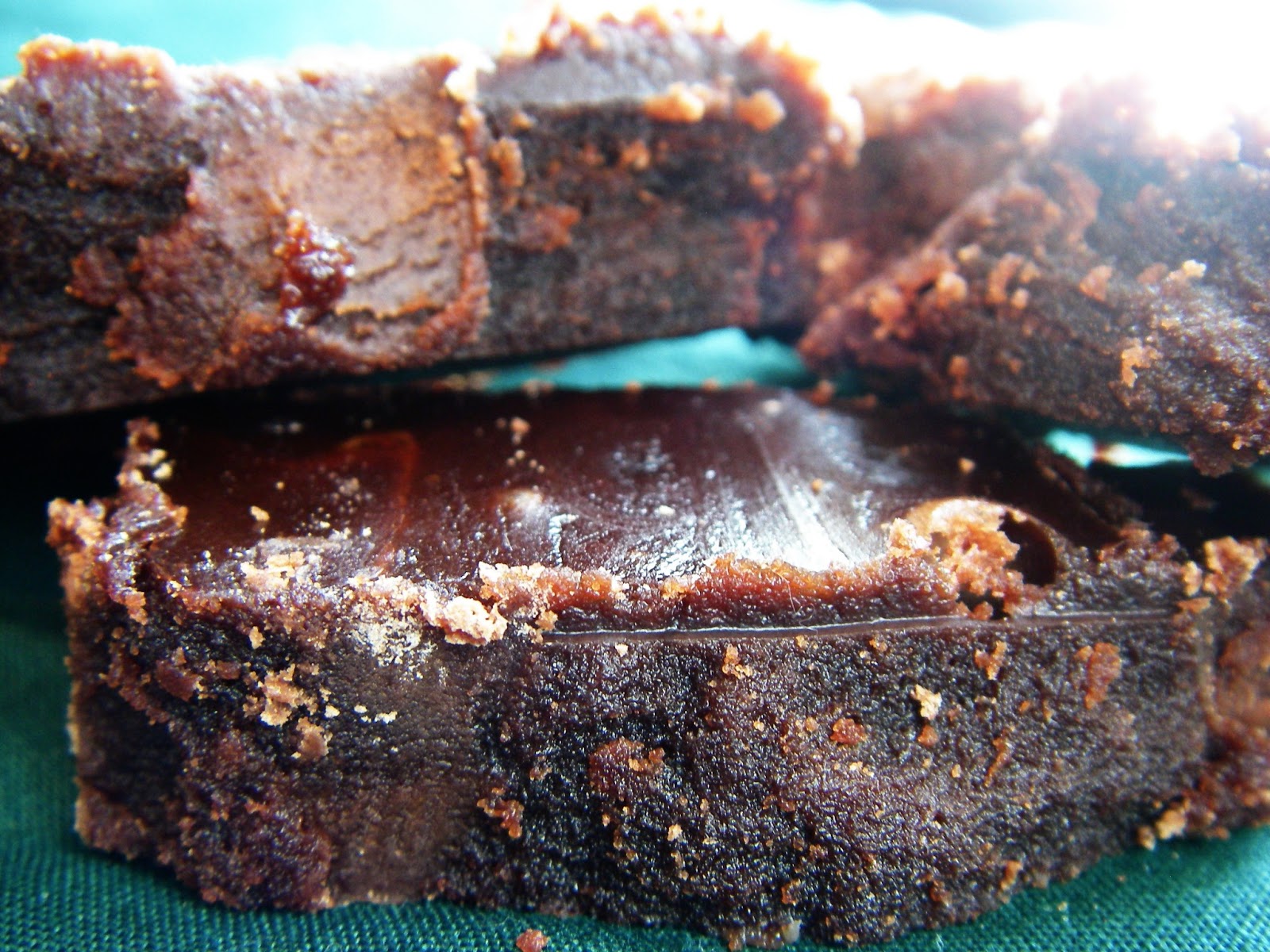
Vegan Fudge: Traditional Homemade Candy - A Step by Step Photo Guide

A truly vegan guilt free fudge, made with organic and Fair trade ingredients!

I don't make nearly enough fudge for the family and for gifts.  I made it so much for the shop that it became a bit of a chore.  But lately, I've been trying to create a habit of whipping some up for special occasions and holidays like Yule gift giving. For Lupercalia last, I poured a batch for my daughter's class in lieu of the more grown-up celebrations.

Actual fudge isn't the bizarre current fashion of brittle pre-cut oversweet crumbles or "instant" recipes of marshmallow cream or melted chocolate chips. Though those are now considered the norm, they are modern and rather inadequate adaptations of the traditional candy, which requires some skill to make.  It's uncommon now to find someone who practices the techniques, other than London High Street candymakers, so until they try the fudge from the StillRoom, most people haven't ever eaten it.

Traditional fudge is a real candy; cracked sucrose heated to a certain temperature.  Since it requires some specialization, as well as access to sugar, this is a relatively modern confection, originally only available to the upper class in the middle ages and working its way down to the rest of us when sugar and high heat cooking became more available.  Although the traditional method takes far more time and care than current industrial techniques, the final result, being much healthier and eco-friendly, is totally worth the effort to learn. People will be impressed that someone still knows how to do this!

I always go to the horse's mouth for my research. Whether it's Roman naturalism treatises or early medieval physician documentations (those I have to get in translation still), to late medieval stillroom books and Victorian household encyclopaedia  I look for the original techniques and uses before I try adapting something.  In the case of fudge and candy making, they were an encouraged art for amateur cooks and a requirement for professionals up until the 70's.  So to get ideas about how to re-create them for today's audience, but still keep the best of the traditions, I refer to cookbooks and instructions from the 60's all the way back to the Tudor era.  In this post, I'll take out most of the guesswork and distil down the best of the techniques for you.  As it were..

Candy making is one of the most dangerous ventures in your kitchen.  Fudge isn't as bad as some, but candy is a thick burning syrup that sticks to your skin and clothing, and doesn't come off easily.  Think Napalm.  When you attempt any candymaking, make sure the kids are busy, the pets aren't underfoot, and no one is running around your workspace.  It is unforgiving, and there are few second chances.  If you get it on your skin, have some comfrey, tea tree, aloe or lemon juice ready.  Only the comfrey will ensure you have no scars, but the others will help you use that hand again in less than a month..  (Experiences of the Candy Maker story no. 1)

1. The Pot


Your choice of pot is pretty crucial.  It has to be nearly three times bigger than the amount of ingredients you first put in it, and it has to be comfortable handling very high heat for a fairly long period. So for a pound of fudge for example, I use a Dutch oven.  If you select too small a pot, you won't be able to correct your choice easily once you get started, since you do not want to attempt to pour splashing candy from one pot to another, and the only alternative is letting it bubble all over your stove.  (Experiences of the Candy Maker story no. 2)

The sides of your pot need to be coated in a fat. Don't worry about the bottom. I used to use butter, but it's not necessary.  The vegan version works just fine with vegetable shortening, cocoa butter, or coconut oil.

2. The Ingredients


For 1/2 lb of fudge:

2 cups sucrose (dehydrated sugar cane juice is what I use.  It's a whole food, and works the same as white sugar. Beet root sugar theoretically will also work.)

1/3-1/2 cup cocoa (I use fair trade organic cocoa, which is much stronger than regular, so compensate accordingly if you don't have any.)

pinch salt (artisan sea salt means I use much less, and it's good for you.)

2/3 cup water (I use filtered.  I can easily taste chlorine, and it can create weird reactions in cookery.)

Try not to get the sugar on the sides if you can.  It will make your job slightly harder later.

3. The Cooking


Stir on the stove while heating.  It will take awhile to combine properly, and continue to mix and stir until it starts boiling. Don't worry too much about the clumps of cocoa, but do be careful not to get sugar on the side.  If you do, scrape it off with your spoon or even a rubber spatula, if you're fussy...  It will start to get very satiny before it starts to bubble.

Then stop, and take the spoon out.  Set your spoon aside and let the candy bubble.

See how big it gets?
Get out your candy thermometer, and place it in the candy, without touching the bottom of the pot.  For fudge, you require the Soft Ball stage, or 235-245F. (about 112 - 118C for most of the world). Check the reading by getting down and looking at eye level.  A few degrees can make all the difference in candy making.

I usually stop at 240F and, depending on the pot I use, it will rise a bit before it starts cooling. I also use  the highest heat setting, but you may want to turn it down as it approaches the correct temp, since it can rise quickly.

My home ec teacher was a true professional, and I remember at least one experiment with candy making where we didn't even use the thermometer, but instead used the ice cold water method, so we learned how each candy stage 'felt'.  For stillroom work, I use the far easier temperature gauge, which is what I recommend here.

Turn off the heat and just let it sit without movingIt will fall quickly.

Get your pan ready.  If I'm shipping or giving the fudge away, I use a disposable or reused tin.  If we're keeping it for home, a cake or pie pan will do. After washing, make sure the pan and lid are thoroughly dry.  Any water droplets can mar the surface look of the fudge. Grease bottom and sides.

Now find something else to do with yourself for a bit.  I try not to leave the kitchen or watch TV, in case I forget what I'm doing, but your fudge needs to remain undisturbed while it cools.  You can leave the thermometer in if you like.  You are waiting until the temp is about 110F, or 45C.  I just use my hands near the bottom of the pot. If it's uncomfortably hot to the touch, it isn't ready yet. Wait until it's still quite warm, but not too long!

4. The Beating


Now comes the trickiest and fussiest part.

Testing, testing...
Using a new, clean, dry spoon, add your flavouring.  I often use the traditional 1/2 tsp. vanilla (organic and fair trade feels good and tastes better, so you use less.)   Mix in and begin to beat the fudge.  Depending on how hot it was, this can take a while. Watch carefully under a good light source. Keep beating until you begin to see the gloss start to disappear with each stroke, and the fudge become heavier and thicker.  Pour into your pan.  Many do not recommend scraping the sides into your pan.  I only suggest it after you have filled your pan, and you want to eat - I mean, test - your batch.  If I am giving it away, I don't want to take a chunk out to test it, which would totally mar the look, so I use the remainder that is scraped on to the spoon.  Mmmm...testing...

(Illustration from Better Homes and Gardens: circa 1966.) 
For home use, score the fudge while it's still warm, to facilitate cutting it later. When I present my handcrafted fudge in the traditional manner for shipping and gift giving, it is sealed when cool, unscored and untouched, until opened by the recipient. Stays softer that way, too, and doesn't get all broken up in transport.

After completely cooling, your fudge should be soft, moist, even grained, and satiny.  If it's not entirely perfect, and isn't completely far gone, a good freezing will fix most errors. Freeze completely, and when it's totally thawed out again, its structure changes to a better grain.  Only freeze once, though, and don't refrigerate after. It turns into a pudding.

Is that a dinosaur print in my fudge? No, that's a kitten track.
Remember to cover your fudge when cooling!
Fudge is a tricky and fickle candy, so occasional sloshes on the side or drops of water can ruin its perfect surface, but fortunately my skill makes such incidents rare.  So you'll need to practice!

5. Variations on a Theme


Herbs


Remember when your food was your medicine and your medicine your food?

From horehound candies to spruce beer; from real marshmallow to liquorice, Western herbalists have traditionally created tasty treats to tempt those under their care to take the vitamins, minerals, and remedies they needed. In the spirit of that ancient protocol, I often add medicinal or nutritive value to my fudge with herbs, or vary the flavours with different additions. Because it's just not magnificent enough already...

Substituting the water with an herbal infusion of organic herbs means the sky's the limit.  Cool and filter with cheesecloth first, of course.  Even one stray leaf will be most unpleasant in a soft, moist, even grained fudge, if it doesn't ruin it completely. I've never found an herb that noticeably affects the flavour of the fudge, so consider what effects you're interested in, rather than worrying about blending the flavours.  Don't forget to use a non-reactive pot for cooking your fudge, too, if you want the herbs to be at their best. Some suggestions are:

*Nettle and Dandelion leaf, which has oodles of vitamins and minerals, including iron, and helps prevent allergic histamine reactions. Forget to take your calcium? Can't stand your iron supplement? Need more B's? This will make you look forward to your daily dose.

*Wild yam, Dong Quai, Vitex, Cohoshes, Cramp Bark, and Licorice Root can make a PMS or Menopause fudge to replace and replenish your hormones.  Who needs Midol?  I have fudge!

*Immune Boosting - Elderberries, Echinacea p. and a., Astragalus, Ginseng, there are so many...  I mean, if your kids are gonna eat 'em anyway..

*Ginseng, Sarsaparilla, Yohimbe, and Damiana can add spark to any adult encounter.  Seriously.  Use this one sparingly.  It totally works..

Flavours


Like it extra chocolatey?  I know I do, so I often double the cocoa powder.

Feel like a mocha? Add expresso as part of your water component.

Organic oils are much stronger than flavoured oils, with no aftertaste.  They are added just before the beating, instead of vanilla. We have experimented with many in the stillroom.  Some of our usuals are:

*Peppermint: Careful.  Organic peppermint is very powerful.  A few drops are all that's needed.
*Sweet Orange.
*Rum
*Brandy
*Lavender. Traditional, believe it or not.

Tips


Candy making is pretty impressive organic chemistry.  You are changing the molecular structure of the sugar, so certain conditions must be met, or it just won't work.  Sugar stops melting at boiling, so make sure all of it is mixed and off the the sides of the pot before it starts to boil, since those grains won't be able to melt after that.  Why is that important?  Because, like honey and syrup, liquid sugar will accrete around any stray particle, especially unmelted sugar, and crystallize completely.  Once that happens, there is almost nothing you can do to save your candy.  It will be inedibley grainy, and even freezing won't fix it.  That's why you need a new spoon to beat with, too.

I therefore air dry, rather than towel dry, all of my equipment where possible, just to be extra cautious of stray particles.

Beating also alters the candy.  The longer you leave it to cool, the quicker it will turn when you begin to beat. If you start too early  it will take forever, but don't wait too long, or the entire thing will set in your pot in a flash.  If you pour before the candy has altered enough, it will be grainy, but usually edible.  Freezing will help that mistake the most.

It's easy to double batch, but triple gets harder.  You need an extra big pot, and strong arms to beat that much candy.  Don't say I didn't warn you...

Not the industrial brittle pre-cut candy most people are used to; this is the most moist and creamiest fudge you've ever tasted, and absolutely guilt free chocolate!  Let me know how your experiments go, and good candy to you!

Saturday, March 9, 2013

Witch Heritage 101: European Aborignals or When Witch haters joke about anti-Witch films

I think I'll be doing my graduate work in European Aboriginal studies, since apparently, it's rumoured that they don't actually exist, or if they did, they don't now, or aren't continuous after all the Xian fundie persecutions. Thanks for proving how necessary that research is, and for giving me the idea..

This FB status of mine was universally Liked from so many of my friends, of all different heritages and faiths. It was one of my most popular ever. Yet, it was in response to one of my alleged friends who has continually seen fit to post anti-witch hate on my FB page, in a constant attempt to deny our existence, veracity, tradition, or continuation. I remain bemused why it is so important to insist that we either never existed, or were exterminated, or are a "traditional folklore monster", and that modern pagans are somehow using the term for 'shock value.' There are so many issues with this that I can't begin to deconstruct it all at once, but it is vital to defend our right to claim ourselves, and fight the dominant Christian narrative of who we are.


I've gone into some of the pathology on anti-witch bigotry and Blood Libel before, but clearly, there needs to be more said, with movies still being produced that encourage our 'hunting', called an "exciting and informative film about witches" by my totally non-hateful friend. But we're much smarter than the dolts who slurped up the anti-Jewish Nazi propaganda, and no one believes what they see on film, especially if it's about a myth, right? Yeah. Of course not. And my neighbours don't threaten to burn down my house, either, or my otherwise intelligent co-workers quietly whisper the question "Could Blair Witch actually happen?"

I feel a little helpless sometimes. When I have these discussions, I assume that my fellow debater has the basic grasp that they are living in a background radiation of the Christian narrative. When I realize that I have to drop the level to something of a first year University course, or maybe even high school, to have a reasonable exchange, I nearly despair of ever reducing the spectre of oppression and persecution. Hence, the title of this post.  I will be using actual public comments as an example to counter some of the most pervasive, harmful, and just bizarrely weird myths. 

Claims that still pervade the literature make it nearly impossible for us to legitimize ourselves and our heritage. Here are some comments on the latest witch hate movie, from an otherwise intelligent person.
"The film's characterization of witches was true to the original traditional folk tale the Bros Grimm collected and published 200 years ago, and that has clear antecedents stretching back centuries before that. Surely all that folklore, i.e. oral history, can't be wrong? Or is it only wrong if it says bad things about witches, but is right if it says good things? ...The film doesn't say anything about modern-day witches. "there are some good "white witches" whose magic heals rather than harms, and the common (evil) witches really hate them. No sign of this in the original folk tales (unless one is re-branding fairy godmothers), so I think that's a nod to modern ideas of witchcraft (as having good as well as evil elements)." ...I'm a lot more confident in the existence of Jews than of witches, sidhe, unicorns, or dragons."
He claims that witches are a "traditional folklore monster". Whose tradition? Well, not ours, surely. Though we have many magic 'bad guys' in faerie tales, which translates close to "witches" in Irish, they are usually part of the trial of the heroine or hero; the adversarial mentor they must overcome to learn their lesson or win their prize. It's not a quality of witches per se, but those witches in those stories do have that role. "Folklore" usually applies to stories and beliefs of the peasantry, that is, the country folk, where the term 'pagan' comes from in Latin. So not the learned Christians, then, but the propaganda spread by the power elite to the people, and not the pagan people, either, but their own leadable 'flock'. "Monster' is the most obvious smear. It's used for people who are so evil they are no longer human, which makes it easy to exterminate them without mercy, or even trial, in some cases.

Obviously, if a group tells horrific, disgusting or offensive stories about another people, that must be who they are.  No one would make up that stuff up to suppress, oppress, or exterminate them. (First Nations, Gypsies, gays...cough, cough...) I've gone into the (totally non-racist) problem of the perpetuation of the myth of "white" and "black" i.e. 'evil' witches before.  Relegating witches to the category of mythical creatures, usually horrible ones, since he later suggests he could call himself an ogre but that doesn't make him one, isn't a harmless or theoretically amusing trivialization.  It is deliberately associating us with fantasy, so we couldn't really exist, except in our own minds, and even if we did, we are inherently supernaturally evil.  (Hmm... supernaturally evil...Sorry.  My mind wanders... Where were we?)

No, my ancestresses did not live in "candy cottages, worship Satan, conjure demons, eat children, ride brooms through the air, or cast spells to dry up dairy herds, blight crops, spread pox, or otherwise harm the community". Defining witches as only those who fulfil that criteria, and then insisting that I therefore cannot be a witch because I don't do all that is a most circular argument, and again, impossible to comply with. Satan is the Christian Antagonist. You have to believe in the Christian world view to be a Satanist or have any business with Him. Pagans do not, and never have. Besoms are, for most varieties of witches, sacred because of their symbolism, so most of us use them in ritual. We can't fly on them, though, so we must not be real. Another attack is confusing medieval Christian propaganda with modern reClaimist, largely Wiccan mythology to make them seem somehow equatable and equally untrue. Modern witches, the argument goes, have created themselves, and historical witches are fantasy, because they are both story sets. "Medieval Christians told stories of women who served Satan and hid in forests eating children. Modern-day witches tell stories of women who followed pre-Christian traditions and harvested forest herbs for healing. I don't actually believe either set of stories - each served or serve a purpose for the people who told/tell stories of them."  Medieval Christians told stories about their rivals, the witches, in a propaganda extravaganza. Just because those stories are ludicrous doesn't mean the real witches didn't exist. They told nasty stories about the Pope being Satan, too. Does that mean he didn't exist?

The Church adopted pagan traditions when it couldn't destroy them. Many forms of paganism survived under a veneer of Christianity. Many of those were a discrete, independent faith and tradition surviving under those very priests, and would have resulted in accusations of witchcraft if the more orthodox and especially non-local authorities got wind of it.

The word Witch is of middle Germanic origin. Similar traditional beliefs and practices were called by a different names in different languages, but they would be called 'witch' in English, and would be persecuted by the same people in the same way with the same accusations were they discovered. Witches were and are real, regardless of what they were called in that language or area, and some of those caught in the net of persecution were authentic. Many were not, of course, and some were simply heretical, which is quite different. However, the term has been co-opted by the Christians to define us, especially in the English tradition. Healers, seers, midwives, abortionists, and local authorities were often accused of witchcraft by the Church, and yet many of those were in fact authentic pagan practitioners, even with a touch of Christianity for camouflage.

This is still one of my favorite pics. It's an official witch group that made it into the 20th century, from a real institution and with the uniform intact. They weren't playacting or at a costume ball. They were healers, there were 13 of them, and they wore their traditional red robes as well as the hats. Deniers claiming that they can't be witches because they were "Christian holy sisters who attended chapel every day" and the hat shapes were just co-incidence is pushing even the bounds of common sense. WHY did those hats and those robes and that number become associated with the healing tradition, and why does that follow the witch healing tradition so exactly?  Because the tradition existed before they became Christian holy sisters.

It's actually impossible to believe that so many of these 'hunts' went on wherever fundie European Christians went without a shred of real witchcraft traditions to back up their claims. One could only consider it wilful ignorance. Social science backs up the claims of these traditional aboriginal beliefs and practices, known as witches in English, from all over Europe, in a continual line to this time. From Estonia. From Bulgaria. 1 2 From Germany. 1 2 3 


The Sami People: Shamans and Symbols
Map of Gaul 52 BC (Small)
Map of Europe's tribes at the beginning of the Common Era. Click here to enlarge. 
Every culture has its magic workers, and some are professional or semi-professional, serving their communities, usually with varying degrees of respect and local power. Witch is a real term that was used with pride, and described a very specific group of English professional pagans, usually women. It was therefore the term used when the Christians wanted to usurp the power positions and land the pagans owned. In other areas, they were called by their traditional names, of course, though when translated into English, the term 'witch' is the equivalent. In Ireland, it was often 'faerie' or various forms of Druid. In Italy, it was strega. In German, it was Hexan. All of those terms and professions were attacked by the Christian fundie patriarchy that coveted their land and power. Nearly all of those terms are now being reClaimed by the traditional witches in their homelands, too, by the way...

Of course, each variety of magic worker had different traditions, but most still go by certain general roles and specialities: healers, seers, shamans, and sub-sets of those. Many had a mystical relationship with animals and plants, some could communicate with or visit the Other World, many told fortunes, some were priestesses and priests of the Old Goddesses, Gods, and Spirits of their area. Many were local judges, who carried the authority of common law and officiated at life events- another reason they were tempting targets.

ROMANIA: Stag on New Year’s Day“These traditions come from Neolithic times—
from shamanism — and they have never stopped,” 
Charles Fréger 

More living European Aboriginal costumes
 and descriptions here.
When the push from the Christians began, many collaborators saw it as an opportunity to remove the balance of power, which was usually more egalitarian in pagan societies, and grab everything they could. So the anti-witch hysteria was blown up as much as possible. Not only was your local professional witch suspect, but anyone who also did a bit of usual pagan magic, or healing or seeing, or hinted of it was now in the line of fire. Most weren't going to believe it at first, and even at the height, most didn't believe it anyway. But like the Communist McCarthy trials, it became political death to defend or even fight the anti-witch craze when they got going. Adding to the fuel was the bizarre torture porn of the sexually deprived monks, who conceived all manner of disgusting intercourse with Satan, and all manner of punishment for these suspected deviants. Of course, that was all part of the attack on traditional cultures. As the saying goes, a people is not gone until "the hearts of its women are on the ground", and the Christian fundie takeover was entirely patriarchal. Since witches in most European aboriginal cultures are primarily women, it was the women who were the primary targets for extermination, humiliation, and disempowerment, whether they were pagan or not. Pretty young girls were accused by local power mongers and disappeared, never making it to trial. Old women who had land were accused, and charged for every part of their own incarceration, like bits of rope to tie the witch with, soldiers to guard her, the food she ate... It was hugely lucrative, and completely transformed the political and social structure of Europe.

Options for survival were limited. Like the Jews who were persecuted in places like medieval Spain and more modern Germany, if one wanted to remain, and not flee (and where would all the magic workers go?), you had to hide in plain sight or hide out of sight. Now, in most of their persecutions, some of the Jews chose to get baptised, even though they kept most of their family traditions intact. In a few generations, they seemed like other Christians, but sometimes the family would recover and reconvert to their traditional heritage when the all-clear was visible, and the danger largely passed. Are they still real Jews? The pagan shrines and priestesses and priests who survived with most of their traditions intact did so by making a deal with Christianity: they got to keep their deities, put Saint on the front of their name, stick a cross on the lot, say your vows to Christ, and you got to keep most of your land, sacred stuff, and culture. The nuns at Kildare did that, for example. Before it was a Bridgetine Christian nunnery, it was a pagan Bridgetine nunnery. Kildare's sacred Flame to Bridget as the Sun aspect didn't go out for over a 1000 years, quite seamlessly with the Christian takeover, too. Many of the Abbeys and monasteries made the same deal. Their holy orders carried on much as usual, but under a new banner. The families experienced the same problem, and usually opted for the same solution. We are always there, however, passing on our knowledge to our children, helping out our neighbours, worshipping in the Old ways and places, even if those places now have crosses on them, and we use Saint in front of their names. During less dangerous times, however, like the Jews and Gypsies, we tend to sneak back out, just to test the waters, because the myths encouraging self-loathing and living under a veneer are always oppressive.

We can see how long it takes for pagan beliefs to be truly usurped, and what happens when fundie Christianity finally takes over. Iceland, for example, was the last place in Europe to officially convert, in about 1000 CE. Yet they still maintained much of their egalitarian society, including their matriarchal naming system, and the oldest continual democracy in the Western world. As spirits of the earth, elves are still very real and negotiated with during any building project. In this recent economic crisis, the largely women leaders let the banks fail, jailed their CEO's and saved the people who were suffering.  That's what even the shadow of European Aboriginal paganism can do. It takes an eon to destroy most of our systems and beliefs and replace it with the unnatural and exploitive patriarchy. The rest of Europe was taken over much earlier, so less of our original systems are left. In some cases, only traces remain, except where the deals were made. Cultural archaeology is useful for uncovering those traces, and many folklorists and fam trad witches are recovering their heritage with these techniques and researches. Are they still witches, even when the rest of the family for generations called themselves Christian, believed they were Christian, and did Christian things in public? Were the Jews who recovered their heritage generations later really Jews? I'm no Rabbi. Maybe I'll ask one, but I certainly can't decide for them, nor can non-witches define who we are, either.

Wiccans, which was never used as a noun for magic workers in any language, are a modern amalgam of a gathering of presumed pagan traditions from around the world, largely from Western Europe. It's very recent, but obviously satisfies, since it's one of the fastest growing religions in North America. Few therefore have a sense of long term history, like the traditionalists, or of future centuries. They usually feel the threat of persecution as an empathy of possibility, as social slights, not an imminent personal danger, like stoning. (It doesn't feel real until one hits you. I can tell you that for a fact.) They are a valid subset of witches, new pagans for a modern age, and rely on the legitimacy of traditionalist beliefs, rituals, and reClaimed and recovered paganism from many areas to form their systems.

I am not a Wiccan. I'm a traditional witch, raised in an family of no faith, which maintained a few Christian rituals when required, like weddings and funerals (which always disgusted, since we totally weren't that. I always loathe hypocrisy, especially to maintain an illusion.) Our obvious connections to the old ways were strongly denied, and I am still ostracised for recognizing and celebrating them, rather than continuing to hide and secretly hate who we are. My sense of deity, beliefs, and abilities were always with me, my skills improved with practice and training, and I now teach a mixture of internal knowledge and external scientific learning, as witches have always done. I have had witch tools since my Initiation when I was 12. My cat-friend familiar was with me for 20 years, but she didn't eat souls or babies. (Go figger!) I am a professional witch operating in the traditional trade of healing. My faith has always been a source of unfailing joy and positive interaction for me. Just wish that would follow with the Haters I meet up with... My primary mentor was raised Eastern Orthodox, but the magic and witch rituals were part and parcel of her family's personal faith, even though it clearly had nothing to do with Christianity in any way, and would get them burnt in more volatile times.They would still call themselves Christian, though my mentor has always been more honest, and changed her name to a proper witch one years ago. She'll be 70 soon... My daughter is proud of her family and who we are. She has her new familiar (she picked the only non-black kitten.  Where did I go wrong?) and just cut her first wand. My son shows no inclination. Makes sense with his personality, though...

We are still here. We will always be here. Just like Aboriginals from around the world, the only way you can truly be rid of us is to exterminate us all. Like all oppressed people, we will hide, sometime for hundreds of years, but we will rise again the moment we can. Women led, women powered, women held, we hold the key to healing the Earth, bringing forth real change and egalitarian democracy, and creating social and environmental justice. I have always stood with my FN sisters, and my sisters all over the globe, since I have always known who I was and where I had come from. Women's magic can save the world, and I will do my part to nurture, illuminate, support, and disseminate it, against the context of the Christian fundie oppressors. We, too, must be Idle No More.


Idealized and romanized Celtic/ UK Aboriginal image, including face shape.


Quotes are from my FB friend's public posts, early March 2013, unless otherwise indicated. I think he should remain nameless...


An abridged version was printed on Witchvox., March 17, 2013.